IBAN Validation and Bank Search
You can use the IBAN or the Bank Search tool to quickly validate and locate the bank information for your beneficiary.
IBAN Validation
IBAN stands for International Bank Account Number, and is an international standard that is used to identify the bank. The IBAN contains the bank account number as well as some other information that is used to accurately identify the correct bank and bank account. IBANs start with two letters, followed by two digits, and then up to 30 alphanumeric characters, depending on the country.
To validate an IBAN
- In the toolbar, under , click .
- The field is optional.
Selecting a country, auto-fills the field with its country code and shows the the required length for a valid IBAN in that country. For example, choosing populates in the field and displays , indicating that the IBAN must be 22 characters long, including the country code, to be valid. - In the field, enter the IBAN without spaces. When you enter an IBAN directly, the field will auto-populate based on the first two characters of the IBAN.
The counter below the field shows the required characters and updates as you type. Once the required count is met, the button is enabled. - Click .
If the IBAN is valid, you will see a green check in the IBAN field, as well as the associated bank's details.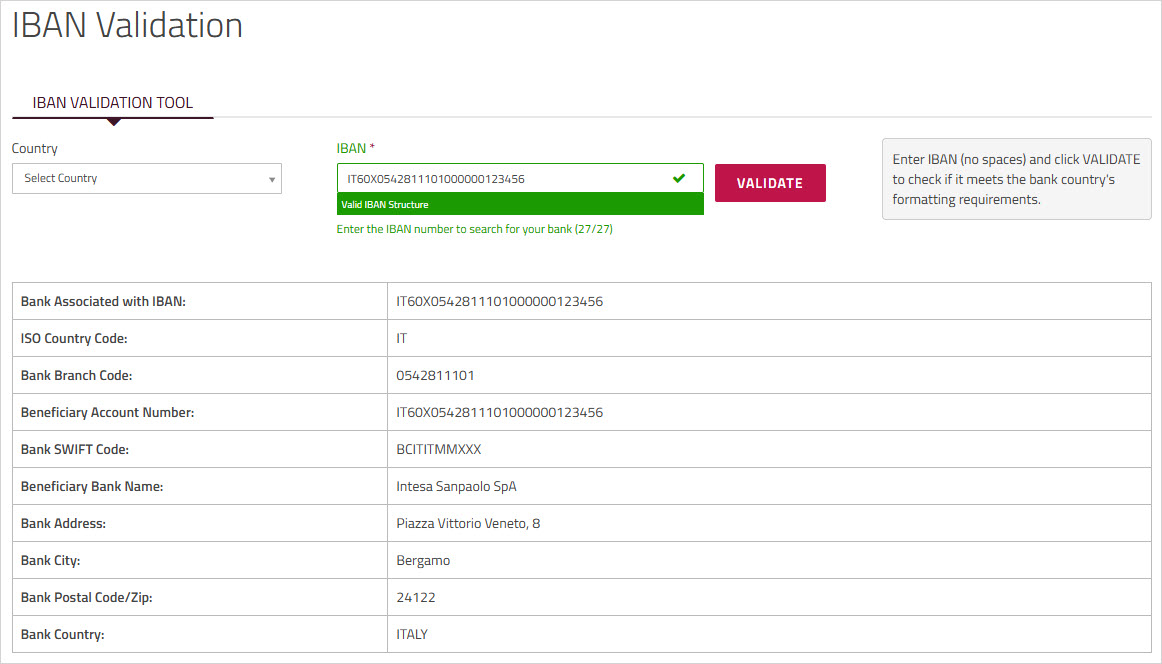
Bank Search
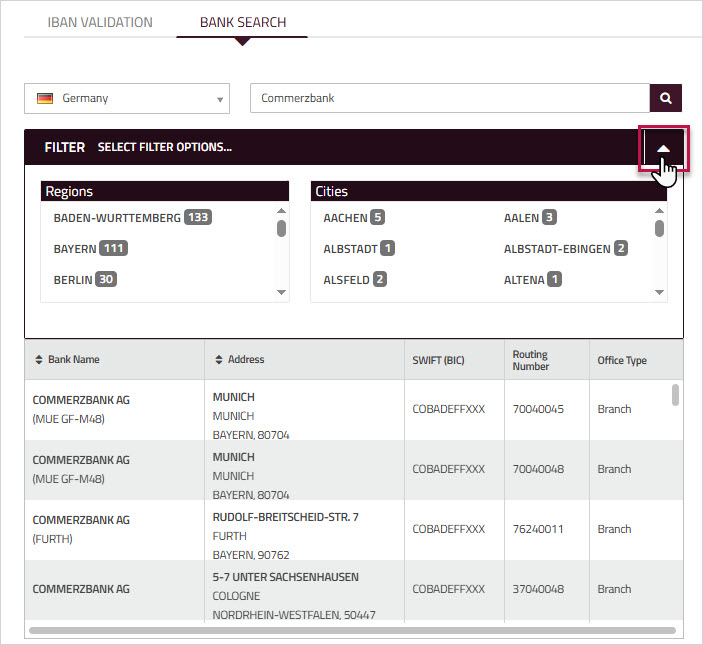
You can use the bank search tool to search and validate the beneficiary's financial institution by entering information related to the institution (for example, partial or full bank name, city, etc.) The search will return all matching institutions based on that criteria.
-
To search, choose the country where the bank is located (Optional) and enter the bank name.
Enter three or more consecutive characters that are in the bank's name, address (street, city, state, province, or country), SWIFT code, or routing code, and then click the search icon. A list of all banks that meet the search criteria is displayed. -
To narrow your search, click to filter the results by or .
-
Click a column heading to reorder the displayed list in ascending or descending order.